By the Tree Wise Guys Team | Published August 17, 2026
Whether you are reclaiming an overgrown back acre, prepping a building lot, or opening up a view, land clearing is a bigger and more regulated job than most Connecticut property owners expect. Here is how it works, what it costs, and the wetlands rule that stops projects cold.
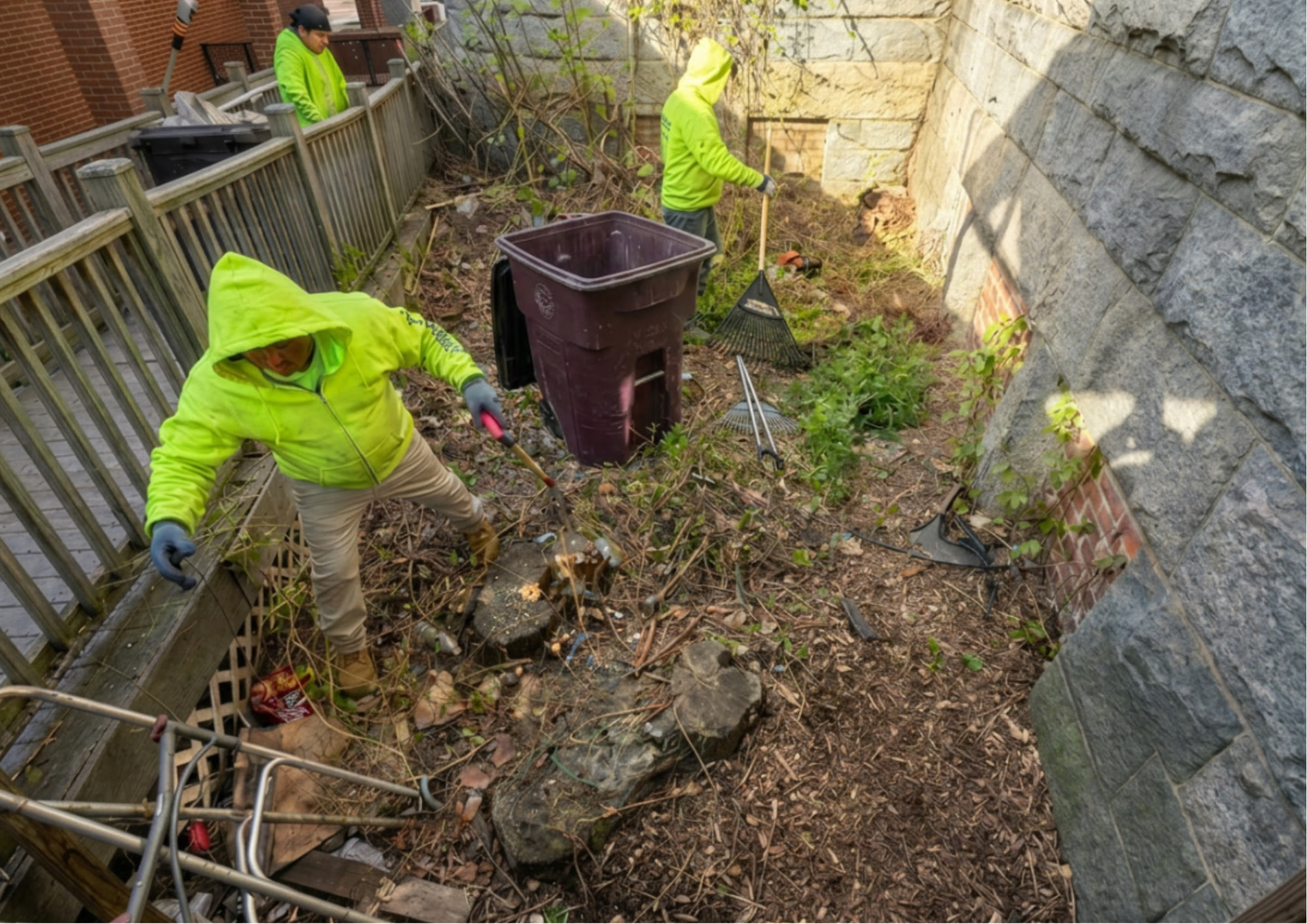
“Land clearing” covers everything from mowing down a half-acre of invasive brush to taking a wooded lot to bare, buildable grade. The equipment, cost, and permitting are completely different across that range, so the first job is defining what you actually need. This guide walks through the levels of clearing, realistic Connecticut pricing, and the regulatory checkpoints that catch property owners off guard.
The Four Levels of Land Clearing
1. Brush and understory clearing
Removing brush, vines, saplings, and invasives — bittersweet, multiflora rose, barberry, knotweed — while leaving mature trees standing. This is the “reclaim the back of the property” job, usually done with a forestry mulcher or brush mower that grinds everything in place into mulch. No stumps to haul, no burn pile, and the mulch layer suppresses regrowth for a season or two.
2. Selective clearing
Brush clearing plus removal of chosen trees — opening a view, thinning a woodlot for health, or carving out space for a yard expansion, pool, barn, or driveway. This is the most common residential job and the one where a good crew earns its money: which trees stay determines what the property looks like for the next fifty years.
3. Full clearing
Everything above grade comes off: trees, brush, stumps ground or excavated. This is building-lot preparation, and it typically involves excavation equipment alongside tree crews. If construction follows, stumps are removed rather than ground, because foundations and septic fields cannot sit on decaying root systems.
4. Grading and finish
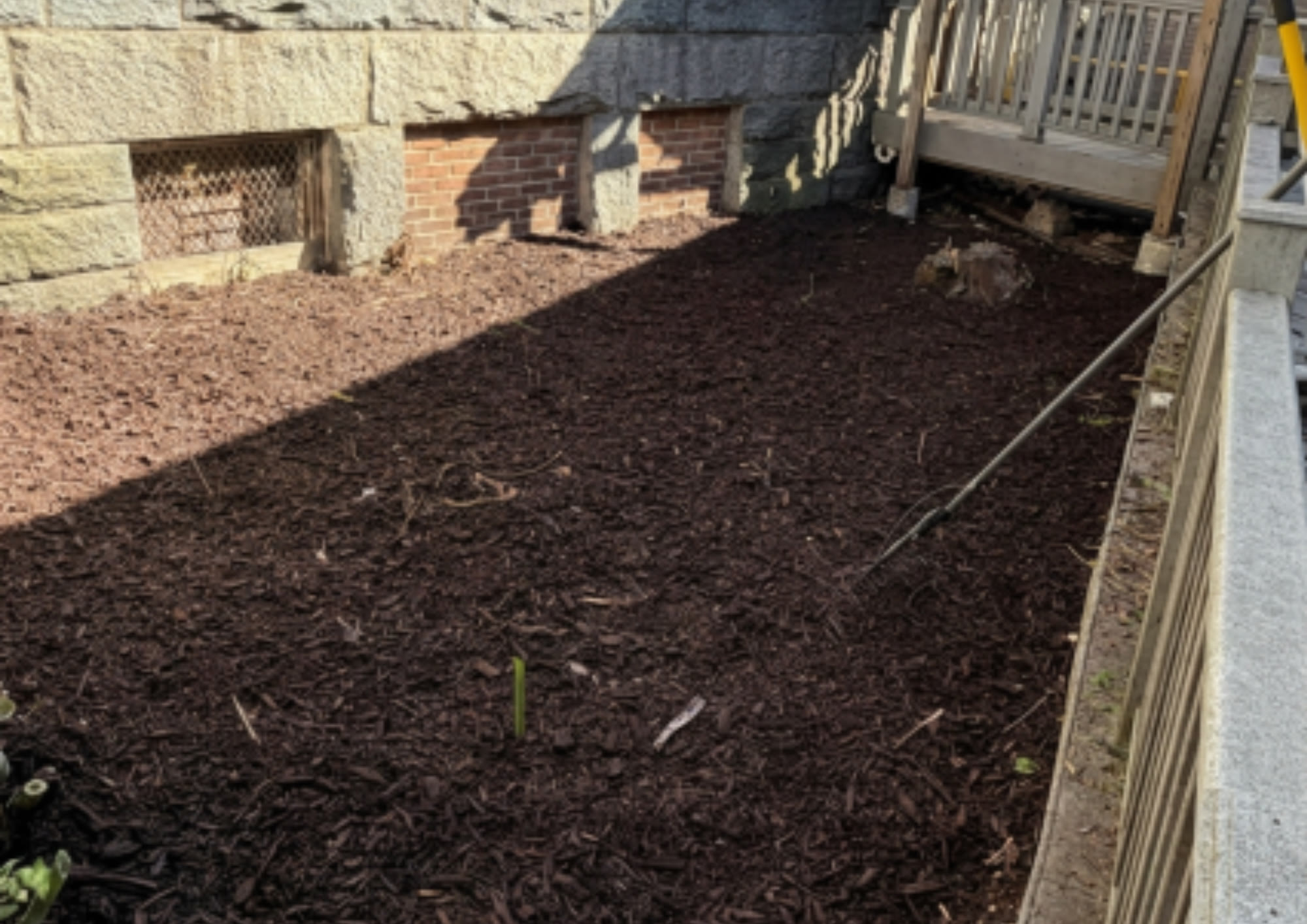
After clearing: stump-hole backfill, rough grading, topsoil spread, and seeding. Ask whether your quote ends at “cleared” or at “usable” — the gap between the two is real money and real mud.
What Land Clearing Costs in Connecticut
- Brush/understory mulching: roughly $1,500 to $3,000 per acre depending on density and terrain. Steep, rocky, or wet ground costs more.
- Selective clearing: priced per tree plus the brush work — commonly $2,000 to $6,000 per acre all-in for typical residential density. Individual large tree removals price as removals; see our tree removal cost guide for how those stack.
- Full lot clearing: $4,000 to $8,000+ per acre for wooded New England ground, more with ledge, wetlands adjacency, or difficult access. Stump excavation and hauling is a major share.
- Small jobs: most residential clearing is a fraction of an acre. A quarter-acre brush reclaim often lands in the $800 to $2,000 range — mobilization sets the floor.
Every honest number above comes with the same caveat: nobody can quote land clearing from the street. Density, species mix, terrain, access, disposal distance, and what is hiding under the brush (old fencing, stone piles, a 1960s appliance graveyard) all move the price. A walk-through costs nothing and turns a guess into a commitment.
Have an Overgrown Corner You Want Back?
Tree Wise Guys handles brush reclamation, selective clearing, and lot preparation across Hartford County. Walk the property with us and get a real number, free.
The Regulatory Part Nobody Warns You About
Connecticut regulates land disturbance more tightly than most property owners realize, and the rules bite before equipment arrives:
- Inland wetlands and watercourses: every Connecticut town has a wetlands commission, and clearing within a wetland or its upland review area — commonly 100 feet, sometimes more — requires a permit or a formal determination. Wetlands are not always obviously wet; a skunk-cabbage swale that is dry in August still counts. Clearing in a regulated area without sign-off can mean stop-work orders, fines, and mandated replanting.
- Erosion and sediment control: larger disturbances trigger E&S requirements — silt fence, stabilized construction entrances, prompt stabilization of bare soil.
- Trees on boundary lines: a tree on the property line belongs to both owners. Removing boundary trees without the neighbor’s agreement is a genuine legal liability in Connecticut — get it in writing.
- Utility easements: clearing under transmission lines or over buried utilities has its own rules; utility marking comes before any grinding or excavation.
We flag wetlands exposure during the walk-through and will tell you plainly when a project needs a trip to the town land use office first. It is a far better conversation than the one that starts with a cease-and-desist letter.
What Happens to All the Material
A wooded acre produces a startling volume of material, and disposal strategy is a real cost lever:
- Mulch in place: forestry mulching grinds brush and small trees where they stand. Cheapest, and the mulch protects soil — but it leaves a chip layer, not a lawn.
- Chip and haul: brush through the chipper, chips hauled or left in a pile for your landscaping use.
- Log value: straight, healthy hardwood logs can go as firewood or occasionally sawlogs. Be realistic — typical yard trees rarely offset much cost, but on larger woodlot jobs the material has value worth discussing.
- Firewood: many clients keep hardwood bucked to length. Say so up front; it changes how the crew processes material.
Timing: When to Clear in Connecticut
Late fall through winter is the professional’s choice. Frozen ground carries equipment without rutting, bare canopies make selective decisions easy, no nesting wildlife, and crews have more schedule flexibility. Winter-cleared ground is also ready for spring seeding or construction. Summer clearing works but costs more in lawn repair, and clearing during mud season is how yards get destroyed. One ecological note: significant clearing during peak songbird nesting (roughly May and June) is worth avoiding when the schedule allows — and on some projects, wildlife timing guidance is a permit condition anyway.
Frequently Asked Questions
Do I need a permit to clear brush on my own property?
Usually not for ordinary brush maintenance away from wetlands. The permit questions start near wetlands and watercourses, in upland review buffers, and when the project involves grading or significant tree removal. When in doubt, a call to your town’s land use office before work is free.
Can you clear invasives without killing them permanently?
Mulching knocks invasives back but bittersweet and knotweed resprout from roots. A realistic plan is initial clearing followed by a season or two of follow-up mowing or targeted treatment. Anyone who promises one-pass permanent eradication of knotweed is selling something.
Will clearing hurt the trees I keep?
It can if done carelessly — equipment compaction and root damage inside a kept tree’s dripline show up as decline two or three years later. Good crews fence off keeper root zones and route equipment around them. This is a question worth asking anyone you hire.
How do I know which trees to keep?
Keep healthy, well-structured natives with room to grow; remove hazards, invasives, and crowded stems competing for the same canopy space. Our arborists walk the lot and tag keepers with you before anything runs — see our guide to what professional tree service includes.
Keep Reading
More helpful guides from Tree Wise Guys:
Ready to See What Your Land Could Be?
Free walk-through estimates on land clearing throughout Hartford County, CT – from quarter-acre brush reclaims to full lot preparation. We will flag any wetlands issues before they become your problem.